
8 min read
Picture this: it’s 7 pm, 72 degrees, and your patio is half‑empty. Across the street, their outdoor tables have a 45‑minute wait. Why? Comfort cues and confidence. Small upgrades—warm, dimmable lighting, a draft‑taming screen, a roof that shuts at first drops, and a “rain‑or‑shine patio” banner—shift choices fast. We’ve seen it. Want that line on your side? This guide shares five proven plays to turn outdoor space into the deciding factor.
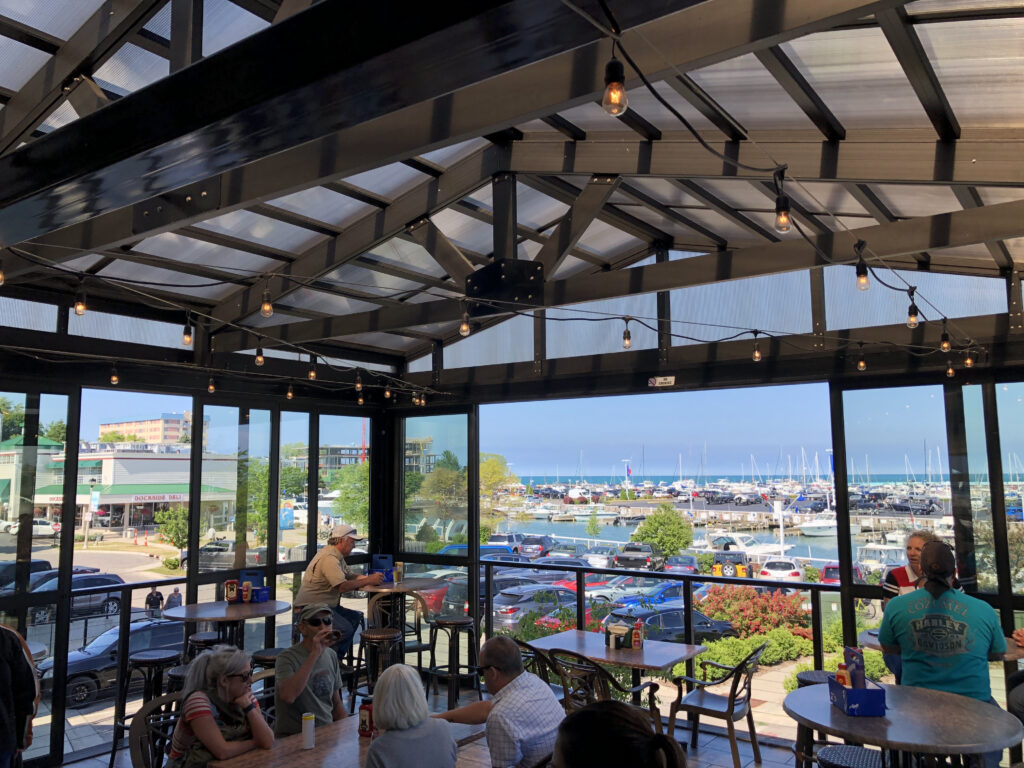
Those five plays matter because outdoor filters now steer search, reservations, and reviews. Guests tap “outdoor seating” on Google and booking apps, then scan photos for shelter. Meanwhile, weather swings—sun to squall in Denver, drizzle in Seattle, sudden heat in Austin—create uncertainty. When your patio is dependable and premium, it becomes sellable inventory: more seats, fewer cancellations, steadier waitlists, and higher check averages.
Expectations also shifted. Post‑pandemic, many guests only choose places where the outdoor option feels comfortable every time—no damp tables, no wind tunneling, no glare. Operators tell us they worry about codes, capex (upfront cost), and day‑to‑day operations. Fair. The point of this guide is to show how to meet demand without chaos: reliable comfort, smarter layouts, better ambiance, rooftops done right, and simple marketing.
Spring sun brings crowds, then a 20‑minute squall empties half the section. Summer heat bakes guests at 4 pm, while evening drafts chase them inside. Street noise drowns conversation; glare hits the back row; condensation slicks the floor. Staff scramble tarps, umbrellas, and heaters between courses. The result? An inconsistent experience guests remember—and not in a good way—plus cancellations, comps, and open tables you can’t fill.
Turns slow when runners detour around posts and pop‑up stands. Servers double back for blankets, batteries, or a dry table, adding minutes to every check. Guests hesitate to book “patio” because they don’t trust the forecast—or your shelter. Waitlists collapse the moment radar turns yellow. That’s real money lost in shoulder seasons when every extra turn, every four‑top, and every private booking matters.
When we audit patios, the same blockers show up again and again. If your outdoor seats feel inconsistent, it’s usually one or more of these.
Umbrellas flip in wind, tear at seams, and need storage you don’t have. Propane heaters run empty at peak, clutter aisles, and add trip hazards. Pop‑ups create patchy coverage—dry chairs here, wet menus there—so half the section is unusable. The look reads makeshift, not memorable. Even on good days, uneven shade and heat limit how early in spring or late into fall you can seat comfortably.
When the setup changes every shift, staff become weather managers, not hosts. You burn labor on hauling covers, swapping tanks, and resetting floor plans, then lose seats to storage and clearance zones. Guests sense the wobble; reviews mention “chaotic,” “cold,” or “got rained on.” Inconsistency kills trust, and trust drives bookings. That’s why temporary gear feels cheap at first—and expensive by the end of the season.
Those band‑aids also carry hidden costs that don’t show on the purchase order. Watch how they chip away at revenue and guest experience over time.
Here’s the integrated playbook we use with operators: combine engineered shelter (retractable roofs and opening walls), thermal comfort, efficient layouts, and brand‑forward ambiance with a simple marketing cadence. Done together, outdoor seats behave like a top‑performing room—rain or shine. You’ll add capacity, stabilize turns, and keep your waitlist moving, without turning staff into part‑time meteorologists.
Below are the five ways we’ll break down next. Skim the list now, then dive into the sections that matter most for your space.
Way 1: Guarantee comfort in any weather
Way 2: Use flexible layouts to add seats and cut waits
Way 3: Elevate ambiance so guests choose you on vibe
Way 4: Turn rooftops into year-round destinations
Way 5: Market the experience where guests decide
Before you market the experience, you have to make it dependable: comfort in any weather. That means shade for midday glare, wind control for gusty corners, and temperature you can dial—radiant heaters for chill, ceiling fans and natural ventilation for heat. Low‑E glass (low‑emissivity, heat‑managing glazing) tames solar gain. And real shelter for precipitation: integrated gutters and sealed joints keep diners and linens dry in a pop‑up squall. Build the enclosure right and service keeps humming—no tarp scrambles, no table resets mid‑course.
When guests trust the patio, they book it. Sensors for wind, rain, and snow (automatic safety controls) open or close the roof while your team stays tableside. Screens and fritted glass cut UV and glare so lunch doesn’t feel like a spotlight. Thermal breaks and integrated drains prevent condensation drips on floors and chairs. Result? Longer dwell times, another round ordered, and fewer weather‑related cancellations. A 6:10 downpour becomes a 6:12 roof‑close—and the conversation never pauses.
Our CabrioLux and CabrioFlex systems deliver year‑round seats without losing that open‑air magic. Explore our retractable roofs for restaurants to see how clear panels, seals, and automation turn patios into all‑weather rooms that still open to the sky.
Use this quick checklist to lock in comfort before layouts. Dial these in, then we’ll add seats and speed up turns with flexible layouts.
With your rapid open/close playbook in place, let’s make the room shape‑shift on demand. Movable boundaries turn one patio into three modes: brunch expansion, happy‑hour bar spillover, and intimate PDR (private‑dining room) without touching the main floor. We map service lanes (clear 36 inches), host stand position, and bussing routes so runners don’t zigzag. Result: fewer cross‑overs, faster turns, calmer shifts. Think 60 seconds saved per table per course. It compounds.
When demand spikes, slide to full capacity: add 18–36 seats without blocking egress (exit paths) or ADA (accessibility) clearances. Host sees every patio table, so the waitlist moves and walk‑ups slot in smoothly. Bar rails and two‑tops near the door absorb early arrivals. Net effect: 10–15 minutes off waits and steadier turns. With capacity handled, you can focus on the vibe that makes guests choose you next.
We design opening walls that slide, fold, or lift so you can expand for rush, contract for storms, and split zones for events. Think five‑minute mode shifts with one person, not a half‑hour reset. More seats when you want them, cozy edges when you don’t.
Lock in these micro‑tactics so your team can switch modes fast without losing seats or service rhythm.
You aligned menus to seating modes—now make the room irresistible. What makes guests pick your patio in two seconds? Start with layers of light: warm 2700K glow at the perimeter, focused task light at tables, and dim-to-1% for late nights. Choose a coherent palette—matte, wipeable surfaces and real textures—so photos read upscale without glare. Tame noise with soft ceilings, planters, and acoustic baffles (sound-absorbing panels disguised as design). And give guests a clear-roof moment—stars after dinner, snowfall during dessert—so discovery happens in their camera roll.
Comfort signals sell the vibe before a server says hello. Cushions stay dry, candles don’t blow out, and there’s zero glare on menus at noon. Carry your brand outside—colors, typography, and finishes—so the patio feels like the same restaurant, not a bolt‑on. Frame a hero view from the host stand and the street; when people slow, point to the stargazing seat or the corner banquette. That’s the moment they choose patio over inside.
Our folding glass lines keep thresholds seamless (flush sill for no trip points) and views uninterrupted. Specify our folding wall system for minimal stacking, big clear openings, and fast mode shifts—so servers glide, strollers roll, and the space feels intentionally designed.
Dial these sensory cues and watch perceived quality rise; we’ll take the same playbook to rooftops next.
Keep that signature, conversation‑friendly vibe—and take it upstairs. Rooftops come with instant advantages: skyline views, novelty, and private‑event appeal. Weatherproof them and the calendar stops wobbling. Picture 60–100 dependable seats that book for brunch, sunset cocktails, and buyouts, even when forecasts shift. A Tuesday fundraiser won’t panic when mid‑afternoon clouds roll in; a Saturday wedding keeps its plan. Because comfort is guaranteed, you can price premiums—minimums hold, packages stick, and rain dates fade. That’s how rooftops lift RevPAOS (revenue per available outdoor seat).
Now for the upside you don’t have to pay for: PR (public relations) and social. A roof‑open/snow‑falling clip can do 20,000 local views by weekend; skyline photos headline press roundups and event calendars. Operations gets easier too. Automated close keeps service rolling in 90 seconds; no tarp scramble, no soggy linens, fewer cancellations. Staff stay hosts, not weather managers. You get predictable turns, steadier waitlists, and sponsors who want the space. Next, we’ll show you how to market that “always‑open rooftop” so it stays full.
Want the open‑air magic without the weather risk? Our retractable roofs for rooftops give you full‑sky moments on bluebird days and sealed, heated comfort when wind, rain, or snow shows up. Clear panels, tight seals, and smart sensors keep guests happy while your team keeps serving.
Now that your roof opens on bluebird days and seals in storms, tell that story where guests choose. Update GBP (Google Business Profile) with “rain‑or‑shine patio” in the title, upload open/closed roof photos, and enable outdoor attributes. In reservations, label outdoor tables and add a note: “Patio always open—roof closes automatically.” Make photo‑first menus and table toppers that point to short reels, and seed UGC (user‑generated content) with a small sign: “Show us your view—#AlwaysOpenPatio.” Train servers on weather‑pivot timing and scripts: “We close in 90 seconds” and “Heaters are on; blankets available.”
Keep the message consistent on Instagram and TikTok (short roof‑motion reels), email, SMS waitlists, and Google Posts. On stormy days, pin a Story: “Cozy tonight—roof closed, reservations open.” Add loyalty nudges: double points on shoulder‑season nights, first‑stargaze alerts, and VIP holds for buyouts. Align measurement with marketing: track clicks on “outdoor” seats, waitlist conversion on rainy hours, and RevPAOS (revenue per available outdoor seat) by daypart. We’ll use the same metrics framework you’ll see next.
For shot inspiration, browse our opening walls gallery; it’s a storyboard for hero angles, roof‑in‑motion clips, and cozy‑storm moments your photographer can replicate.
Use this quick checklist to make the space sell itself.
Those loyalty offers hit harder when guests feel the upgrade—starting with the right opening wall. Think about five factors: footprint, traffic patterns, opening size, sealing in wind/rain, and code clearances. For example, if you want a 22–30 foot span without posts and host sightlines end‑to‑end, prioritize minimal stacking and strong gaskets. Pick well now, and your wait times and reviews improve fast.
Choose sliding wall systems when you need wide, uninterrupted spans, slim sightlines, and almost no stacked panels. Great for 20–40 feet runs, bay windows, and rail‑adjacent seating where every inch matters. Fewer posts boost views—and check averages. Select the right wall and your ROI (return on investment) model gets friendlier; we’ll show the math next.
| Option | Best For | Space Needed | Seal (Wind/Rain) | Changeover Speed |
|---|---|---|---|---|
| Sliding glass walls | Long uninterrupted views; large spans up to 40 feet | Minimal stacking; slim rails; no swing space | Strong with quality gaskets and interlocks | Fast, linear motion; one-person operation |
| Folding (bi-fold) glass walls | Moderate spans; dramatic, clear openings for parties | Some stacking space at one side required | Strong with continuous thresholds and top seals | Fast; creates wide portals in seconds |
| Fixed glass panels | Permanent weather shield with integrated doors | No moveable clearances; smallest footprint | Excellent—continuous, fixed seals block wind and rain | N/A; not reconfigurable during service |
Not reconfigurable during service? That constraint shows up in ROI (return on investment) because flexibility drives turns. Your payback lives in four levers: seats added, season extension, event viability, and small check lifts from comfort. We model seats and turns by daypart, then layer in extra operating weeks and rain‑out reduction. When those stabilize, the patio behaves like a top room, not a weather gamble.
So what does the math look like for you? Example (illustrative): add 24 seats × $35 average check × 1.6 turns × 120 more reliable days = about $161,000 gross. Now subtract capex, utilities, light maintenance, and any added labor. In milder climates, payback often lands in 12–30 months; harsher climates or small patios take longer. Track RevPAOS (revenue per available outdoor seat) so your team can course‑correct fast. We’ll run your variables—no guesses—and prep next‑step options.
Four‑season revenue needs a reliable backbone: retractable roof systems with tight seals, sensors, and fast operation. They protect turns when weather flips and unlock events in shoulder seasons. If the model pencils out, we’ll move into the implementation steps next.
| Scenario | Investment Focus | Season Extension | Primary Revenue Lever | Notes |
|---|---|---|---|---|
| Basic patio refresh | Shade, lighting, soft seating | +4–6 weeks | Higher dwell time; photo appeal | Low complexity; quick win |
| Weather‑ready lite | Wind screens; targeted heaters | +8–10 weeks | Fewer cancellations; steadier bookings | Moderate complexity; staff training |
| Retractable roof core | Roof + controls integration | +16–24+ weeks | Year‑round covers; event viability | Requires permitting/design |
| Full enclosure strategy | Roof + opening walls + HVAC (heating, ventilation, air conditioning) | All‑season | Premium pricing; private events | Flagship experience |
Flagship experience approved? Let’s turn the model into milestones—your path from idea to opening in seven steps, with clear timelines, budgets, and responsibilities.
Step 1: Assess goals, constraints, and code — 15‑minute consult; photos, dimensions; capacity target; budget guardrails; flag egress (exit paths) and ADA (accessibility) early.
Step 2: Microclimate + layout study (wind, sun, flow) — Map gusts, shade, glare; test service lanes; locate heaters/fans; confirm 36‑inch paths, sightlines.
Step 3: Concept design with budget ranges — Sketch roof/walls; renderings; good‑better‑best pricing; ROI (return on investment) check; align finishes and MEP (mechanical, electrical, plumbing) approach.
Step 4: Engineering + permitting path — Structural calculations; stamped drawings; AHJ (authority having jurisdiction) pre‑screen; snow/wind ratings; schedule inspections; neighbor/landlord coordination.
Step 5: Fabrication + site prep — Approve finishes; order long‑lead components; prep slab, curbs, power; coordinate trades; plan staging for minimal downtime.
Step 6: Install, commissioning, staff training — 2–5 day install; test sensors; write SOPs (standard operating procedures); train open/close; cleaning; safety; soft‑error drills.
Step 7: Soft launch + marketing push — Invite top regulars; shoot roof‑open/closed clips; update GBP (Google Business Profile); enable patio booking; start scorecard tracking.
You’ve rehearsed the weather‑pivot SOP (standard operating procedure) to 90 seconds—now prove it pays. Track KPIs (key performance indicators) weekly; link demand, revenue, and guest sentiment to choices—and spot pitfalls early.
You’re tracking patio KPIs and event bookings—great. Now sidestep the pitfalls that stall openings, erode trust, and slow payback; we see these five tripwires most. See it next.
We shot those golden‑hour, roof‑open/closed photos on day one. Challenge: a 28‑seat neighborhood patio that emptied whenever radar turned yellow—umbrellas flipped, propane ran dry, weeknights sagged. Approach: we added a Cabrio retractable roof with integrated gutters and seals, sliding opening walls, tuned lighting and acoustics, and a weather‑pivot SOP (standard operating procedure). Result: the room felt intentional, stayed dry in pop‑up showers, and looked great online.
Operationally, service got calmer. The team practiced the close and hit a 90‑second roof move, so no mid‑course scrambles and fewer comps on wet nights. Bookings stabilized through shoulder season; rainy‑day cancellations dropped, and Thursday buyout inquiries started landing. Check averages nudged up with longer dwell. “Our patio is now our most requested section—no matter the forecast.” Wondering how long this takes, what it costs, or how permitting works? We cover those FAQs next.
You asked about timeline, cost, and permitting after that snapshot. Here are quick, plain‑English answers so you can gauge fit fast and move forward with confidence.
Q: How long does a typical install take, and can we stay open? A: 2–5 days on site; we stage work to keep you serving, with off‑hours closures.
Q: What permits or codes should we plan for? A: Building and electrical; sometimes zoning. We provide stamped engineering and drawings, and coordinate with AHJ (local authority).
Q: How do retractable systems handle snow, wind, and drainage? A: Rated for local loads, anchored to structure, with joints, integrated gutters, and sensors that auto‑close in storms.
Q: How do we train staff for open/close transitions? A: We create SOP (standard operating procedure), do 15‑minute drill, assign roles, and hit 90‑second close while service continues.
Q: What ongoing maintenance is required? A: Clean glass, tracks, and gutters monthly; check seals seasonally; schedule an annual tune‑up. We supply a checklist and optional service plans.
Maintenance looks straightforward—now let’s see if your space pencils out. Book a 20‑minute design consult for a quick feasibility check and budget range. If you want to prep, scan our roof systems resource for options and ratings. No pressure—just clarity on fit, timeline, and next steps.
Get Expert Help
Let's discuss your project goals
Weather is the silent business partner you didn’t agree to — and it still gets a vote on your capacity, staffing, and bookings.
Weather is the silent business partner you didn’t agree to — and it still gets a vote on your capacity, staffing, and bookings.

Cabrio {cab•rio: convertible, opening} Structures Inc. is a nationally recognized designer and manufacturer of patented independently moving roof and wall patio systems. Our structures are located across the country from Boston, Mass. to Seattle, Washington. Bring on the weather.