8 min read
Our blueprint from Cabrio Structures to retractable roofs and opening walls—365‑day use, cleaner air, stronger revenue—engineered for cold climates. Picture January air over warm water, then close tight in minutes.
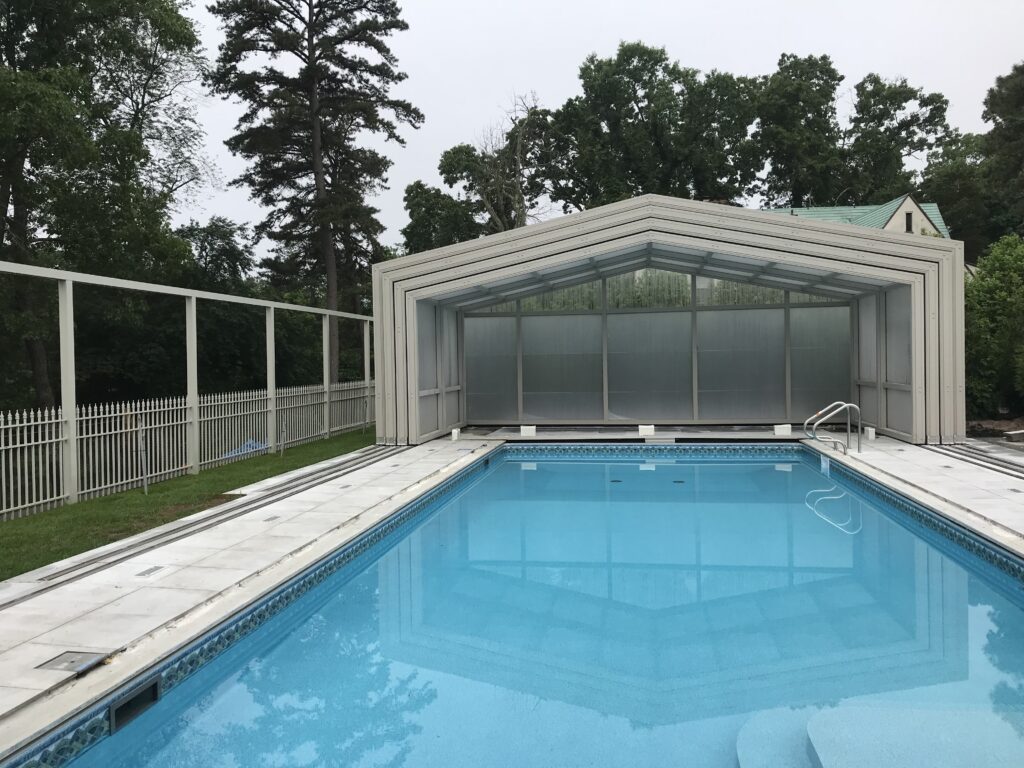
You just pictured January air over warm water—now feel the moment. The roof glides back on a clear 25°F (−4°C) morning; sunlight floods the lanes, steam feathers upward, and the faint outdoor hush replaces the mechanical drone. Chlorine haze lifts. Lifeguards breathe easy. Swimmers look up at sky, not ceiling. Could you give your community that open‑air summer feeling in the dead of winter—then close tight in minutes when clouds roll in?
In July, your deck buzzes—splashes, laughter, sun‑warm concrete. In January, it’s quiet enough to hear lane lines ticking, windows fogging at the corners. Now imagine sliding a 100‑foot wall and cracking the roof: fresh air sweeps in, the sting in eyes eases, voices sound brighter. You tap close; seals engage; heat holds. What would that do for attendance on weeknights—and for lifeguard morale during long meets?
So why is this rare today, and how do you get there without risk? We’ll break down the constraints—and the retractable systems that solve them.
You asked why this is rare—and how to get there without risk. Utilization swings tell the story: summers are packed; winter weeknights go flat. You’re torn between keeping water warm and humidity stable, and giving people that outdoor ambiance they crave. Meanwhile, members now expect fresh air moments, daylight, and comfort—without fogged glass or chlorine tang. Budgets are tight, but your mission is big: community health, safe staffing, and equitable access year‑round.
Now the pressure’s higher. Dehumidification and reheat cycles (drying moist air, then warming it again) often dominate energy bills, while fixed glazing turns July into a greenhouse. Condensation spots become corrosion points, shortening the life of fixtures and finishes. Attendance dips when air feels stale; parents choose gyms over “the chlorine box.” Post‑pandemic, ventilation expectations and ESG (environmental, social, governance) goals make “good enough” risky. You need real airflow and daylight—without surrendering your season.
The facilities that win focus on three levers: better ventilation, honest daylight, and flexible openings—not just water temperature. That’s where satisfaction, safety, and revenue start compounding.
Walk your deck at 6 a.m. and you’ll see it: fogged glazing, drip lines under mullions, and a gray haze at the breathing zone. That haze is chloramines (disinfection byproducts that irritate eyes and lungs) pooling at the waterline where swimmers and lifeguards inhale. Without fresh air, the room feels heavy; blower noise competes with whistles; reverberation makes instructions hard to hear. Meanwhile, HVAC (heating, ventilation, and air conditioning) runs hard to dehumidify and reheat, chasing setpoints while puddles form at cold corners. The stakes are real: safety vigilance drops when eyes sting, guests cut visits short, and refunds stack up on crowded days.
Behind the scenes, corrosion accelerates. Stainless hardware tea‑stains, light housings pit, door gear binds, and handrail anchors loosen as chlorides and condensation do their slow damage. Housekeeping expands from towels and tests to squeegees and spot‑mopping under weeping frames. Programming suffers too: you skip family nights when the air feels oppressive, and rentals choose brighter venues. Lifeguards report headaches and scratchy throats, so scheduling gets tougher. In short, you spend more to deliver less—comfort drops, energy spikes, and equipment ages faster than planned.
If these sound familiar, you’re not alone. Leaders usually recognize five symptoms long before capital planning catches up:
Air‑supported domes (inflated covers) bring quick season extension, but daylight is weak, ventilation is limited, blowers are noisy, and membranes wear fast. Fixed‑roof natatoriums feel durable, yet they trade openness for heavy HVAC loads, stale air, and rigid layouts. Seasonal shutdowns cut costs, yes—but at the price of zero access, lost memberships, and idle staff. Each path solves one problem while creating another: either high energy and poor ambiance, short service lives, or straight‑up lost revenue.
Here’s the short list of why legacy approaches underdeliver, even when well‑run:
Instead of closures that cost access and revenue, we give you a natatorium that breathes on demand. Retractable roof panels slide open to vent warm, moist air; operable glass walls stack or glide to bring in fresh air and views. When closed, insulated low‑E glazing (glass that reduces heat loss) and true thermal breaks (insulating barriers inside frames) hold temperature and fight condensation. Marine‑grade aluminum frames (corrosion‑resistant metal) and continuous gaskets keep it tight. Weather sensors watch wind, rain, and snow; safety interlocks (automatic lockouts) prevent movement outside safe conditions. Open for sun and sky. Close for storms in minutes.
Operations stay simple. A wall tablet, key switch, or BMS (building management system) schedule commands zones—roof bays, end walls, or spectator sides—so you modulate airflow, daylight, and humidity like a dimmer. Interlocks sync with dehumidifiers and VFDs (variable‑frequency drives that adjust fan speed) to run purge cycles when weather is favorable, then ramp down. Typical actuation is quick: many roofs open a bay in 60–120 seconds, walls in under a minute. Manual overrides and e‑stops are standard. Staff get a short checklist; your team gets predictable comfort.
Want the deeper dive? Explore our retractable swimming pool roofs for specs, photos, and options built for harsh climates.
Here’s what your guests, staff, and budget feel—immediately:
Those sky-over-water moments that attract members show up in operations immediately. In the morning huddle, you check the forecast and set a 3–5 p.m. open window; the scheduler tags “Open-Air Family Swim.” After lessons, you open two roof bays for a 15-minute purge, odor complaints drop to zero on the log, and lifeguards stop rubbing their eyes. Parents linger for another 30 minutes; lessons roll straight into free swim without resetting the room. Morale rises.
Staffing gets easier when the room feels safe and clear. Sightlines improve as fog disappears; voices carry without the HVAC (heating, ventilation, and air conditioning) drone, so instructions land the first time. Your SOPs (standard operating procedures) add one line: confirm weather limits, open the assigned zone, two-tap close if conditions change. Training takes 30 minutes, including emergency stops and manual overrides. Dehumidifiers idle during purge windows, whistles feel less urgent, and rotations stay sharp. Ready to picture your exact setup? Let’s choose roof geometries, walls, and finishes.
Side openings connect the deck to patios or greenspace in seconds—roll panels, slide gates, and your splash zone doubles. Explore configurations on our opening walls page.
Since you’ve seen how side openings expand the deck, let’s map the roof motions and wall mixes that make it effortless. Common setups: ridge‑sliding gables (panels meet at the peak and glide apart), multi‑bay sections you open by zone, and single‑slope roofs that shed snow while venting leeward. Around the perimeter, combine long sliding runs on spectator sides with folding stacks at high‑traffic doors for quick flips. Result: precise airflow, big views, and tight closure.
For long, clean openings, our sliding glass walls run on low‑friction tracks and park neatly in pockets—see the system overview on our sliding wall system page.
Where space is tight but you want a wide, clear opening, consider our all‑glass bi‑folds—panels stack compactly; learn more on the folding wall system page.
In early planning, we’ll ask a few essentials so your roof and walls perform on day one. Start your notes with these.
Ready to compare hardware? See dimensions, tracks, and locking options on the sliding wall product page. For compact stacking and wide clearances, explore the folding wall product page.
Since you’re comparing hardware, let’s lock in the building-science must‑haves. Structure first: marine‑grade aluminum frames (highly corrosion‑resistant) land on steel supports with isolation pads to prevent galvanic corrosion (dissimilar metals reacting). Insulated low‑E IGUs (double panes with heat‑saving coatings) plus true thermal breaks in every mullion keep interior surfaces warm—so no drip lines when it’s 25°F outside. Vapor control is critical: continuous interior air/vapor seals at curbs and joints, with warm‑side sealing so moist room air can’t sneak into cold cavities. The outcome is simple: warm frames, dry cavities, quiet operation.
Now tie it to air. Closed mode integrates with HVAC (heating, ventilation, and air conditioning) and dehumidification to hold 82–86°F air/water and 50–60% RH (relative humidity) with low noise. Open mode runs mixed‑mode control: BMS (building management system) rules open roof bays/walls when outdoor dew point and wind are favorable, then trigger 10–20‑minute purge cycles that dilute chloramines quickly. Weather sensors manage rain, snow, and gusts; interlocks pause movement if limits are exceeded. Corrosion strategy is C5‑M level (harsh marine/chemical): 6063‑T6 aluminum, 316 stainless fasteners, compatible sealants, and positive drainage/weep paths. Result: clear air today, durable performance for decades.
Want exact spans, loads, and glazing specs? See our retractable roof systems for details built around natatorium conditions.
Use this quick comparison to match ventilation, flexibility, energy profile, and timeline—at a glance.
| Option | Ventilation & Daylight | Seasonal Flexibility | Energy Profile | Lifespan | Typical Cost | Install Timeline |
|---|---|---|---|---|---|---|
| Fixed roof natatorium | Limited natural air; moderate daylight | Low | High HVAC demand | 30+ yrs | $$ | Long |
| Air-supported dome | Forced air; low daylight | Medium (seasonal) | Medium-high | 10–15 yrs | $ | Short |
| Seasonal bubble | Low daylight; noisy fans | Medium (seasonal) | Medium-high | 5–10 yrs | $ | Short |
| Retractable roof + operable walls | Excellent natural air/light | High (year-round) | Optimized with mixed-mode | 30+ yrs | $$ | Moderate |
You saw the timeline is moderate—here’s exactly how we move from feasibility to opening day with clear owners, clean approvals, and minimal downtime. Simple, five steps.
Step 1: Discovery & goals — We map programs, seasons, attendance targets, and pain points, then set success metrics with your architect and aquatics lead.
Step 2: Concept & engineering — We define roof geometry, opening walls, spans/loads, ventilation, and controls, then deliver concept drawings, sequence-of-work, and a clear budget range.
Step 3: Permitting & coordination — We align with the AHJ (authority having jurisdiction), codes, and pool operations; submit drawings; coordinate structural, MEP, and BMS interfaces.
Step 4: Fabrication & prep — We build offsite, procure glazing/actuators, and ready curbs, drainage, power, and controls—compressing onsite time and protecting your program schedule.
Step 5: Installation & training — We crane in, assemble, seal, commission; verify safety; integrate controls; train your team on SOPs, emergency overrides, and seasonal operation.
Typical timeline: 16–28 weeks end to end. Design/permitting 6–12, fabrication 8–12, installation 3–10 days. Seasonality, loads, and integration complexity can shift durations; we confirm your schedule at concept.
With a 16–28 week timeline, your next question is ROI (return on investment). Compare solution tiers and finishes on our roof systems overview to see cost ranges and value levers before you budget.
Now, what drives cost? Start with these primary factors to set expectations before design.
Model ROI three ways: membership retention and attendance lift (even +10–20% in winter), new programs and rentals (birthday nights, meets, therapy blocks), and energy optimization (15–30% HVAC (heating, ventilation, and air conditioning) runtime reduction on purge days). Use conservative baselines, sensitivity ranges, and a one-year payback snapshot. Next, see the numbers in action.
You asked to see the numbers in action—here’s a snapshot from a municipal aquatics center in a cold‑weather region. Before the upgrade, winter weeknights lagged by roughly a third and odor complaints hit the log on most busy days. After we designed a retractable gable roof and a 100‑foot sliding wall, they opened the room on about 40 winter days. Weeknight attendance lifted around 20%. Birthday rentals and family swim blocks returned, and chlorine‑smell notes dropped to near zero. During short open‑air purge windows, the dehumidifier’s runtime fell by roughly 25–30% while comfort visibly improved.
Operations felt the shift on day one. Lifeguards reported fewer eye and throat irritations, call‑outs eased, and training for open/close SOPs (standard operating procedures) took under an hour. The team leaned into programming—“January Open‑Air Swim” nights, small meets, and therapy sessions—with quicker room resets and clearer sightlines. Marketing posted a 30‑second timelapse; engagement jumped and local sponsors asked to host community nights. Want ideas to borrow from rooftop venues and restaurants? Let’s pull in what works next.
After helping 500+ venues unlock indoor‑outdoor comfort, we’ve learned your best natatorium ideas often come from other spaces. Borrowing proven patterns de‑risks design and shortens approvals because staff and boards have already seen them work.
Hospitality patios flip from drizzle to sunshine in seconds; that same fast transform suits family swim nights. See how operators zone seating, heaters, and airflow with our retractable roofs for restaurant patios.
Skyline venues learn wind the hard way—gusts, eddies, and comfort bands. Borrow their lessons on partial openings, windward/leeward control, and tie-downs in our retractable roofs for rooftops gallery.
For spa‑like comfort, look to homes: quiet actuation, privacy glass, and gentle shading that makes evening swims feel calm. Explore details we adapt—acoustics, lighting, and seals—on our retractable roofs for residential spaces.
Those residential comforts—quiet actuation, privacy, gentle shading—spark ideas, and probably a few nuts‑and‑bolts questions. Here are quick answers; ask us your site‑specific ones anytime.
If zoned wall or roof openings fit your program, let’s map them to your site in a free, 30‑minute design consult. You’ll see tailored concepts for spans, loads, and openings—built for year‑round use, fresher air, and a standout member experience. Bring a floor plan; we’ll bring options and ballpark costs.
Get Expert Help
Let's discuss your project goals
Weather is the silent business partner you didn’t agree to — and it still gets a vote on your capacity, staffing, and bookings.
Weather is the silent business partner you didn’t agree to — and it still gets a vote on your capacity, staffing, and bookings.

Cabrio {cab•rio: convertible, opening} Structures Inc. is a nationally recognized designer and manufacturer of patented independently moving roof and wall patio systems. Our structures are located across the country from Boston, Mass. to Seattle, Washington. Bring on the weather.