
8 min read
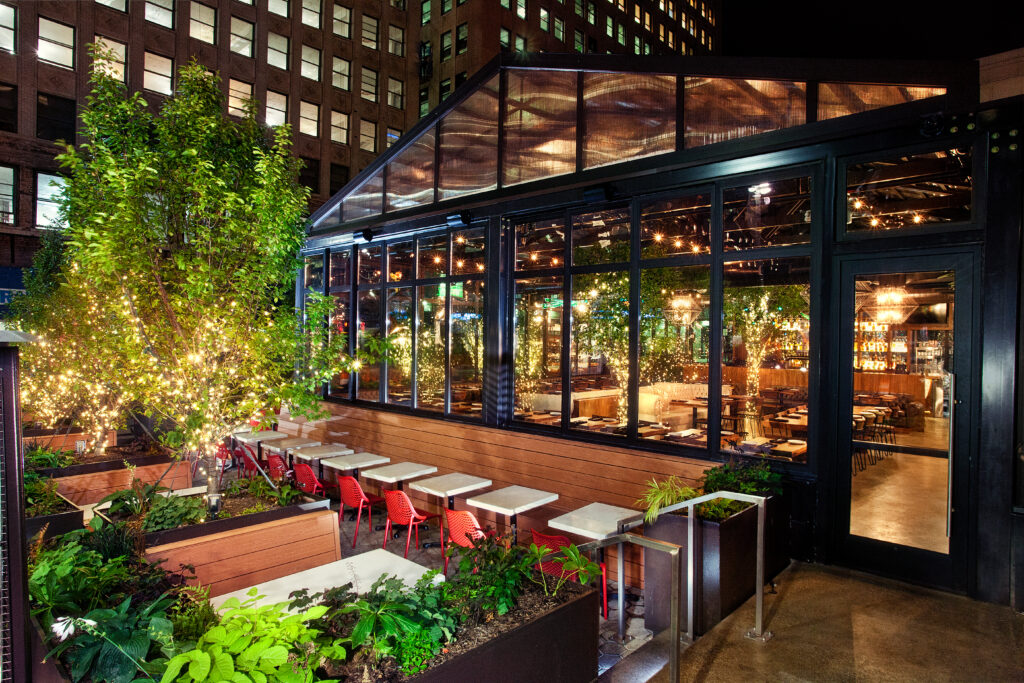
Commercial benefits sound straightforward—until the forecast twitches. At 4 p.m., your patio’s packed on paper. By 6, a two-degree dip and a drizzle icon flip plans. Texts roll in: ‘We’ll see.’ Walk-ins vanish, heaters fight wind, and guests who do show rush the check. That’s not bad luck. It’s weather throttling bookings, dwell time, and spend.
And the cost isn’t abstract. You staffed an extra two servers, prepped $800 in perishables, and still watched 30% of covers disappear in an hour. The rooftop table that sells the $22 cocktail? Empty. The rehearsal dinner? On hold, then moved inside with discounts. Meanwhile, your team rides forecast anxiety instead of a plan. So what if you could make weather irrelevant to guests—and predictable to your P&L (profit and loss)?
So why are those 10–30% swings showing up more often? Since 2020, guests deliberately choose fresh‑air dining, rooftops, and flexible event space. Patios stopped being “nice to have” and became core rooms. On busy nights we see outdoor seats contribute 30–50% of covers. When that area is unstable, the whole profit picture wobbles. Stabilize it, and shoulder seasons turn into bookable, profitable days.
At the same time, operating pressures climbed. Energy rates rose, wages jumped, and hiring remains tight. You can’t overstaff “maybe” nights or waste prep on storms that fizzle. The win is predictability: one controllable outdoor zone can add 4–8 reliable service windows per week in many markets. That steadies labor plans, trims waste, and lifts revenue per square foot like an indoor room.
Guests now expect a rain‑or‑shine promise without sacrificing the open‑air vibe. When you deliver comfort—sun when it’s perfect, cover when it’s not—outdoor seats earn like the dining room. Check averages climb with dwell time, and cancellations drop. Add smart daylighting and ventilation, and you reduce energy per occupied hour. That’s why controllable outdoor space isn’t décor anymore—it’s a revenue system that needs to be managed.
Here are the key forces making outdoor space mission-critical today:
Forecast jitters start the cascade. At 2 p.m., guests hedge, your host delays confirmations, and by 5 p.m. you’re half‑closing a 40‑seat patio. Capacity drops, sections get awkward, and the team comps dessert after umbrellas flip. Meanwhile, you staffed to the sunny morning, not the gusty evening. Labor per cover spikes, prep walks, and average check falls because nobody lingers. Margins shrink before service even starts.
Now the math. Lose 24 patio seats for 40 marginal days and you forfeit 960 covers. At a $42 average check and 65% gross margin, that’s $26,208 in contribution, before bar rounds. Add waste from over‑prep ($300–$800 per swing night), plus 6–10 excess labor hours, and cost per cover climbs fast. Event side, a single rain‑out can erase a month of profit if the backup space downgrades the experience.
Here are the specific risk patterns operators recognize instantly:
Tents signal temporary. Guests feel it, and so do inspectors. Fabric structures can trigger permitting and fire/life‑safety reviews (rules about egress and flame spread) you didn’t plan for. Space heaters and umbrellas only help in a narrow band of conditions; a 10‑mph crosswind or sideways rain defeats both. Fixed enclosures solve rain, but erase open‑sky magic and can tip you into different code categories, inviting mechanical, sprinkler, and smoke‑control questions.
Operationally, these fixes create new headaches. Tents flap, pool water on roofs, and demand constant anchoring. Heaters chew propane or electricity and leave cold pockets that shorten dwell time. Umbrellas crowd sightlines and blow budgets with midseason replacements. Fully fixed glass boxes overheat on sunny days and feel stuffy without engineered ventilation. Guests notice. The vibe shifts from premium escape to makeshift workaround, and that shows up in reviews, rebookings, and event conversion.
Compare common options against what you really need: resilient, code‑compliant comfort and a premium vibe.
| Option | Typical CapEx | Typical OpEx | Guest Experience | Weather Resilience | Permitting/Code | Brand Impact |
|---|---|---|---|---|---|---|
| Tents | Low | Medium | Makeshift, obstructed views | Low | Varies | Temporary feel |
| Space heaters & umbrellas | Low | Medium | Patchy comfort | Low | Low | Inconsistent |
| Fixed pergola/canopy | Medium | Low | Partially covered, less flexible | Medium | Medium | Can feel closed-in |
| Retractable roof system | Medium | Low-Medium | Premium, open-sky on demand | High | Medium-High | Elevated, memorable |
Elevated, memorable is the goal—and it’s exactly what a retractable roof delivers. You get open‑sky ambiance on demand, then watertight shelter the moment conditions shift. Panels in insulated aluminum, tempered glass or polycarbonate (lightweight, impact‑resistant plastic) glide on quiet drives, with seals and gutters managing rain and wind. Sensors can auto‑close on weather, so your team focuses on guests, not umbrellas. Every system is engineered for local snow loads.
Pair the roof with opening walls—sliding, folding, or stacking panels (moveable glass that opens whole sides)—to control sun, airflow, and acoustics. Low‑e glass (a thin energy‑saving coating) and operable vents keep spaces bright, not stuffy. On a sunny brunch, everything retracts. When clouds, wind, or cold move in, you close in under a minute and keep the vibe, the view, and the booking.
Explore our retractable roof systems—CabrioLux, CabrioFlex, and custom opening walls—sized for your spans, climate loads, and budget. We tailor finishes, glazing, sensors, and controls to your brand, then integrate with lighting and drainage for a seamless room. We’ll quantify payback next.
Here are the commercial wins buyers care about most:
🏗️ Proven in the Field
Cabrio Structures designs, engineers, and installs custom systems for restaurants, hotels, rooftops, pools, and venues—built for local codes, real loads, and daily operations.
Built for real operations is great—but what does it do to your P&L (profit and loss)? These scenarios use simple inputs: average check $40–$55, 1.6–2.0 turns, 60–70% gross margin, and 12–28 added weeks of usable days. They’re illustrative; tailor to your market, concept, and staffing model.
| Venue Type | Added Covered Area (sq ft) | Season Extension (weeks) | Incremental Covers/Attendance | Revenue Uplift (%) | Payback (months) | Notes |
|---|---|---|---|---|---|---|
| Restaurant patio | 1,000 | 12–16 weeks | +1,800 covers | 18–25% | 12–18 months | Weatherproofed patio enables full bookings |
| Rooftop bar | 1,500 | 16–20 weeks | +12,000 guest visits | 22–35% | 10–16 months | Wind/rain control keeps premium seats open |
| Event venue | 3,000 | 20–24 weeks | +24 ticketed events | 20–30% | 12–20 months | Fewer cancellations, higher rental rates |
| Swim club/aquatic | 2,500 | 20–28 weeks | +600 member visits | 15–22% | 14–20 months | Extended season, better family comfort |
Financing spreads CapEx (capital expenditure) over 60–84 months, depreciation reduces taxable income, and dynamic pricing lifts yield on peak dates. Together, these levers shorten payback meaningfully. Want a human example, not just a table? Next, a quick before/after that shows how the numbers landed in practice.
You asked for a human example—here’s a composite before/after we see often. A 70-seat patio in a windy corridor kept losing 20% of prime-time covers whenever a light shower rolled through. Managers overstaffed, then cut mid-service; event inquiries ended with “weather permitting.” We installed a Cabrio retractable roof with two opening walls, engineered for local wind and snow loads. Within weeks, bookings stabilized, hosts confirmed outdoor tables confidently, and the GM added two midweek buyouts per month.
Guests kept the open-sky vibe on perfect afternoons, then watched the roof glide shut when showers hit—no scramble, no umbrellas. Sound stayed pleasant, sunlight soft, and thresholds stayed dry, so people lingered for dessert and another round. On cool nights, radiant heat and low‑e glass kept it cozy without feeling boxed in. In month three, no-shows dropped 38%, average check rose $5–$7, and the events team sold Tuesday/Wednesday packages that previously died at the forecast screen.
If you want to see how this translates to your floor plan, our page on retractable roofs for restaurants shows layouts, spans, finishes, and real project photos for inspiration.
Here’s how the wins show up on your scoreboard:
Want those higher comfort scores and repeat visits? Here’s how we get you there—step by step. Expect design/permitting in 8–16 weeks and fabrication/installation in 4–8, depending on site access, structure, and climate. You, your architect, and local officials weigh in. Different typologies within our roof systems portfolio fit patios, rooftops, and pools.
We recommend the right mix from our roof systems after a quick feasibility review—spans, loads, and budget—so you know what’s possible on your site and how it fits operations.
Here’s the path from first call to first service—clear roles, realistic timelines, no guesswork.
Step 1: Discovery: Share site photos, measurements, climate, and revenue goals; we flag constraints early and align on budget range and payback targets.
Step 2: Concept design: Sketch massing, spans, and openings; map sightlines, guest flow, and host stand logic; choose glazing, shading, and wall types to fit vibe and climate.
Step 3: Engineering: Verify structural loads, attachment, and deflection; design drainage, snow/ice management, thermal and acoustic performance; integrate sensors, motors, and controls with your electrical plan.
Step 4: Permitting: Prepare drawings and calculations; address codes, fire/life safety, egress, sprinklers, and accessibility; coordinate reviews with local building officials to streamline approvals.
Step 5: Fabrication: Procure materials, machine components, and finish frames; quality assurance checks at each milestone; schedule shipping and crane access based on site logistics.
Step 6: Installation: Phase work to keep you trading; enforce safety; set structure, glazing, and seals; commission automation; weather-test; hand back areas nightly when possible.
Step 7: Training & handoff: Train your team on open/close policy, maintenance, and controls; deliver ops playbook, service schedule, spare parts, and warranty documentation.
⏱️ Timeline Tip
Small patios often complete in 10–14 weeks from permit, larger rooftops 16–28 weeks. Early site surveys and structural info accelerate design and approvals, often saving 2–4 weeks.
With timelines locked, the next question is performance: how will the roof and vertical glass behave during service? Pairing a retractable roof with adaptable glazing creates patio‑to‑pavilion flexibility—breeze when it’s perfect, shelter when it’s not. We plan airflow, server circulation, solar control, and acoustics, then enable a sub‑60‑second changeover.
Think big apertures: our opening walls expand entire bays, erase thresholds, and keep sightlines clean so guests flow naturally between zones while staff stays efficient.
For fast reconfigures, sliding wall systems stack neatly into pockets, opening full lengths for service rushes, then glide closed to block wind without killing views.
When spans are wide and floor tracks must stay minimal, a folding wall system creates big openings with tight stacks, ideal for patios, rooftops, and pool decks.
Operators notice these integration wins on day one of service:
If you can reconfigure in minutes, the wins look different by sector. Scan below and map them to your space—revenue, staffing, guest comfort. Next, we’ll cover the engineering and compliance steps that keep approvals smooth.
Smoother operations for planners happen when approvals are predictable. We align your architect, our engineers, and the AHJ (the local code authority) in week one to set targets: structural loads, egress (clear exit paths), weatherproofing, and comfort. Agree early, document clearly, and submittals move faster. Next, we turn that into daily operations and metrics.
When we specify sliding wall systems, we verify tested wind/water ratings, maintain required egress widths, and choose hardware proven for 50,000+ cycles. That means panels glide smoothly on busy nights and close tight in storms, without chewing through rollers or creating bottlenecks at exits.
Use this checklist of the technical items that move permits and protect uptime:
With thresholds low and operability set for all users, how do you run it daily? At lineup, your manager checks wind, temperature, and radar, then sets the mode: open below 18 mph (miles per hour), vented 18–28, closed above or on active rain. Sensors auto‑close; a keyed override keeps control. One trained point person owns the call. We supply a one‑page policy. Pre‑shift test: 2 minutes. Example: light drizzle? Vented mode keeps 40 patio seats earning.
Care is simple: daily wipe of tracks and drains, weekly gasket check, monthly sensor test, and a 30–45‑minute quarterly clean. We schedule an annual tune‑up and cycle count, then update seals as needed. You get a multi‑year warranty on structure and drives, plus same‑day remote diagnostics and 48‑hour on‑site response in most markets. Managers get a 30‑minute training, new hires a 10‑minute refresher. Downtime target: under 1% annually.
Track these KPIs (key performance indicators) to confirm the business case:
Those plus 15–30% labor gains are real—and you’ll get pushback. Here’s how we answer the most common concerns, in plain English.
If daily operation is a two-minute SOP, the math should be too. Use this five-step framework to estimate your payback in minutes.
Step 1: Baseline: List outdoor seats, average turns, and average check by weather band; note current usable days. Example: 40 seats, 1.8 turns, $45 check, 120 usable days.
Step 2: Continuity: Estimate percent of lost seat-hours (seats × hours open) you recover on marginal days. Typical range 50–80%. Example: regain 70% during drizzle and breezy evenings.
Step 3: Season: Add weeks and compute extra covers: weeks × days × seats × turns. Example: 12 × 5 × 40 × 1.8 = 4,320.
Step 4: Events: Add new rental days and ticketed events; estimate margin per event. Example: +2 rentals/month × $3,500 margin × 8 months = $56,000.
Step 5: Payback: CapEx (capital cost) ÷ monthly added gross margin = months to payback. Example: $250K ÷ $18K/month ≈ 14 months.
Bring your numbers to a 20-minute feasibility consult; we’ll validate assumptions against past project data and your climate, then send a budget range and payback window. If you prefer, email the list and we’ll run it.
Bring those calculator inputs—seats, check average, added days—and we’ll turn them into a plan. Our promise is simple: predictable bookings, premium experiences, faster payback. We’ve helped venues nationwide stabilize outdoor revenue with 12–18 month paybacks and fewer rain-outs. Want the same clarity in 20 minutes? Book a no-pressure planning call.
Prefer email? Send site photos and rough dimensions, and we’ll reply with a budget range, payback window, and next steps. Typical response: 1–2 business days. Real outcomes we see: 25–50% fewer no-shows and 8–24 added weeks of usable days. Your numbers will drive the plan.
Get Expert Help
Let's discuss your project goals
Weather is the silent business partner you didn’t agree to — and it still gets a vote on your capacity, staffing, and bookings.
Weather is the silent business partner you didn’t agree to — and it still gets a vote on your capacity, staffing, and bookings.

Cabrio {cab•rio: convertible, opening} Structures Inc. is a nationally recognized designer and manufacturer of patented independently moving roof and wall patio systems. Our structures are located across the country from Boston, Mass. to Seattle, Washington. Bring on the weather.