
8 min read
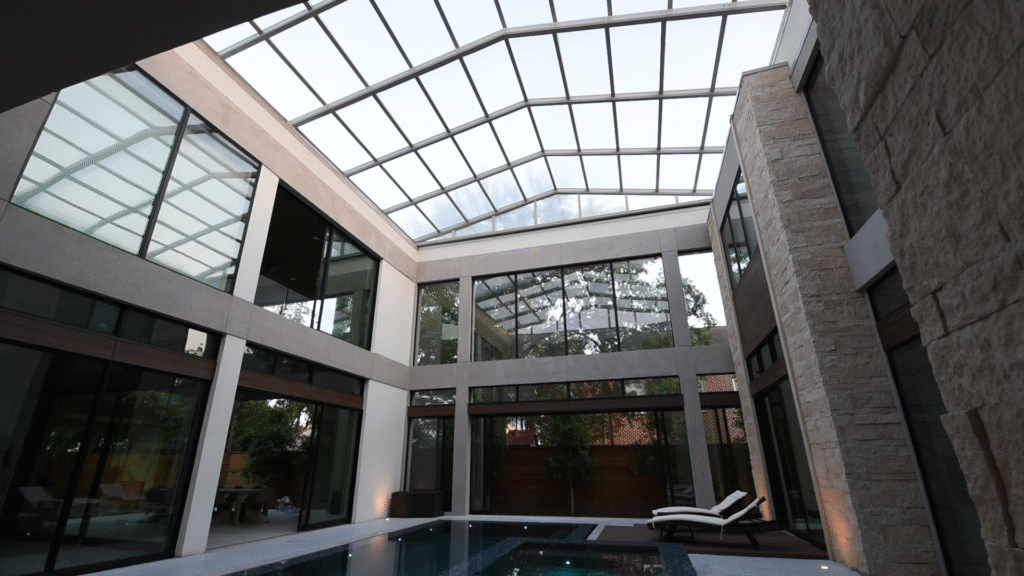
That design boost lives above your head. One cloud drifts and you watch guests scoot chairs, chasing sun or shade, while the vibe unravels. Give your team control—open the roof for a breeze, filter glare with glass, close it before a sprinkle—and the room stays ‘just right’ longer. That consistency turns into repeat visits and bigger checks. See how retractable roofs for commercial spaces convert fair‑weather traffic into loyal regulars. It isn’t decor; it’s a loyalty system.
Picture the first raindrops at golden hour: you tap a preset, the roof glides shut, conversation continues, and your best seats stay filled. No table shuffle. No apologies. That’s the power of controllable comfort. Our retractable roofs and walls solutions let you fine‑tune light, air, and acoustics by zone, so more seats are usable on more days—and guests remember how it felt.
You don’t have to take our word for it. Studies across hospitality and retail link daylight and fresh air to longer dwell times, higher sales, and better mood; we’ll cite those and show how operability—open/close on demand—amplifies the effect. We’ll also map comfort “scenes” to POS (point‑of‑sale, your register data) and reviews to attribute results. For a preview, see why restaurants love retractable skylights and walls. Next up: why this matters now.
So why now? Customer acquisition costs keep rising while guests judge you by how a space feels, not just what you serve. They expect seamless indoor‑outdoor flow and comfort on demand—sun when they want it, shelter seconds later. We also see weather volatility ambushing capacity. One pop‑up shower can wipe out a dinner’s profit. And competition is fierce down the block. Loyalty today is earned by consistent, memorable experiences, not discounts. If you want proof in numbers, browse our case studies.
Think about a Saturday brunch: clouds roll in, wind picks up. With operable coverage, you close a zone in 30 seconds and keep 24 patio seats turning; without it, those two turns vanish. Guests also care about IAQ (indoor air quality—fresh air and low CO2) and daylight. Spaces that deliver both become the default choice for meetings, dates, and events. For specifics, see how retractable roofs revolutionize commercial spaces.
Experience quality shows up in RevPASH (revenue per available seat hour), repeat‑visit rate, and NPS (Net Promoter Score—would they recommend you). When comfort improves, RevPASH stabilizes, shoulder seasons smooth, and complaint rates drop. Many underperforming spaces share fixable environmental factors: glare, drafts, and slow changeovers. Want a diagnostic and options by budget? Start with the Cabrio Product Guide.
Certain environmental frictions quietly erode satisfaction and repeat business on patios, rooftops, and light‑starved interiors—especially at the edges, where smarter opening walls can control airflow and sound.
That operational friction you feel—manual covers and staff‑dependent awnings—shows up in loyalty, not just labor. These stopgaps can save a shift, but they rarely deliver consistent, just‑right comfort. Scan this quick comparison, then check our case studies to see outcomes side‑by‑side. Next, we’ll show how integrated operable systems turn patchwork into a repeatable loyalty engine.
| Fix | Weather resilience | Guest comfort | Brand perception | Operating cost | Effect on loyalty |
|---|---|---|---|---|---|
| Umbrellas | Tips in light gusts; useless in rain. | Patchy shade; guests shuffle seats constantly. | Looks improvised; clashes with premium concepts. | Low upfront; frequent breakage and replacements. | Minimal, unreliable; fair‑weather seats only. |
| Fixed awning | Moderate sun/rain protection; poor in crosswinds. | Shade only; heat and smoke trap underneath. | Can feel dark or dated versus glass. | Low to moderate maintenance and cleaning. | Neutral in mild days; negative during heat. |
| Temporary tent | High coverage; enclosed feel; wind flap noise. | Stale air; humidity builds; limited ventilation. | Event or emergency vibe; not brand‑elevating. | Moderate rentals; labor for setup/teardown. | Mixed, often negative; guests cut visits short. |
| Portable heaters | No rain or wind protection at all. | Localized heat; cold ankles and backs persist. | Patchwork, cluttered look; added safety concerns. | Moderate fuel costs; frequent tank swaps. | Minor lift in shoulder seasons only. |
| Non‑operable skylight | No control of weather or ventilation. | Glare and heat gain without shading. | Premium look; disappointment if uncomfortable. | Low operating cost; periodic cleaning. | Neutral without controls; can deter summer use. |
“Neutral without controls” might describe fixed covers; our operable roofs flip that outcome. You tap open for breeze and sky, then close before drizzle hits—sensors (wind and rain detectors that act automatically) and zoning (independent sections) keep more seats in the sweet spot. That turns volatile weather into signature moments guests remember. Expect longer dwell, steadier Thursday–Sunday covers, and more event confidence. Explore our retractable roofs and walls solutions if you want comfort on demand that shows up in repeat visits and reviews.
On rooftops, speed and segmentation matter. Our systems close in under 60 seconds per bay (a roof section), rain scenes trigger automatically, and partial closures preserve half the room when winds shift. The result: more bookable days, higher RevPASH (revenue per available seat hour), and fewer comped checks (free meals due to discomfort). One client salvaged 3–4 service periods per week in spring/fall shoulder season (the in‑between months). If that’s your brief, start with retractable roofs for rooftops. Next, we’ll break down the design moves that compound those gains.
🔗 Related
Center your plan on retractable roof systems—the core platform for year‑round experience control and measurable loyalty.
So if the retractable roof is your core platform, which moves turn it into felt loyalty? Here’s our quick playbook to translate operability into comfort, beauty, and brandable moments—especially for events under retractable skylights.
So did those event‑ready moves pay off? Here’s proof, in three quick snapshots: Before → Design → Results. We keep claims verifiable, with POS (point‑of‑sale) and booking data to back them up. For deeper reads, see our full case studies.
Those dwell‑time and energy wins are great—now let’s measure them the same way in your space. Baseline 4–8 weeks pre‑construction, then check at 30/90/180 days after opening. Normalize for weather year over year so storms don’t skew results. Tag scenes in POS (point‑of‑sale) and CRM (customer relationship management). Ready to set this up? Kick off planning at get started and we’ll build your dashboard.
| KPI | How to measure | Baseline | Target after 6–12 months | Why it matters |
|---|---|---|---|---|
| Repeat visit rate | CRM and POS matchback by guest ID or card token | Collect pre‑project repeat rate for 4–8 weeks | Sustained increase versus baseline; validate with weather‑normalized comps | Direct indicator of loyalty and habit formation |
| Dwell time | Table turn data, Wi‑Fi or vision analytics, timestamped checks | Measure pre‑project by daypart and zone | Meaningful lift by zone without reducing turns | Longer stays correlate with higher check size |
| RevPASH (revenue per available seat hour) | POS sales divided by open seat hours by zone | Capture pre‑project by season and daypart | Higher throughput with steadier shoulder seasons | Shows revenue efficiency per seat and scene |
| Event bookings | Track inquiry‑to‑contract rate and calendar utilization | Count bookings and conversion pre‑project by month | Seasonal lift in bookings and utilization rate | Predictable premium revenue, upsells, and PR moments |
| NPS/CSAT (loyalty and satisfaction scores) | Post‑visit survey via QR, email, or receipt link | Collect pre‑project scores; tag comfort mentions | Score increase with fewer temperature and noise complaints | Sentiment and word‑of‑mouth proxy for experience |
| Weather closure days | Ops logs and sensor‑triggered closure reports | Historic average closures by month/season | Fewer full or partial closures year over year | Stabilizes capacity and staffing plans |
If your goal is to stabilize capacity and staffing plans, here’s the delivery path. We align guest‑experience outcomes with architecture, MEP (mechanical, electrical, plumbing), and operations from day one. Ready to start? Book discovery via contact Cabrio Structures and we’ll map scope, budget, and timeline.
You’ve got the scene playbook from launch—now let’s wire the physics so those presets feel amazing, every day. Start with glazing tuned by orientation: target lower SHGC (solar heat‑gain coefficient—how much sun heat gets through) on west/east panels and use selective low‑E (low emissivity—reduces summer gain, holds winter warmth) coatings. Pair with dynamic shading—external louvers or interior shades—so glare drops without killing views, and we bake seasonal presets during commissioning. For selections by climate, our Cabrio Product Guide maps glass, U‑value (insulation rating), and shade strategies to comfort outcomes.
Condensation control is about temperature and pathways. We use thermally broken frames (insulating breaks in metal), interior weeps (hidden drain channels), and warm‑edge spacers so moisture forms less—and drains when it does. Ventilation runs on sensors: CO2 (carbon dioxide) opens a bay for fresh air, temperature tilts shades, and wind/rain triggers safe auto‑close with manual override. See the approach scaled to a home sunroom in this residential skylight retractable roof. Once the roof physics are dialed, we turn to the edges.
Designing a smaller lounge, spa, or amenity room? For thermal comfort in compact footprints, explore our retractable roofs for residential spaces to see how glazing, shading, and presets keep temperature steady without sacrificing sky and light.
With maintenance access planned, the next move is the perimeter. Opening the edges boosts airflow, sightlines, and perceived space—three levers guests feel fast. See our opening walls overview, then pick what fits traffic, wind, and cleaning; we’ll address permits next.
About those permits we promised to address—plus downtime and budget—here’s how we de‑risk delivery. We phase construction by bay with 1–2 night closures, keep 70–80% of seats open, and publish a weekly work plan to share. Permitting: we front‑load stamped drawings, life‑safety notes, and structural calcs, then coordinate with the AHJ (authority having jurisdiction—local code office) to speed review. Budget: we set a target range, lock scope with alternates; for firm numbers, request an estimate and we’ll price options.
Communication keeps revenue flowing. We script guest messaging (“Upgrading your comfort—open during install”), align dust/noise windows, and schedule deliveries off‑hours. Change control matters, too: documented decisions, add/deduct alternates, and a standing owner–GC–Cabrio huddle. Reliability is planned: critical spares on site, SLAs (service level agreements—uptime targets), and 45‑minute staff training with a quick‑start card. Want a phased plan you can hand to your team? Use get started and we’ll map a no‑surprises schedule with contingency options.
✅ Social Proof
We’ve helped businesses across the U.S. build weather‑resilient, loyalty‑boosting spaces—operating through snow, wind, and coastal humidity—with measurable lifts in usable days and comfort reviews.
Not roof‑ready yet? Start with perimeter upgrades—open an edge to improve airflow and vibe; consider the folding wall system as a phased first step.
If “start with the edge” sounds right, we’ll map it—or the full roof—together. Book a 30‑minute consult focused on your guest‑experience goals, constraints, and budget. Share a floor plan and a few photos; we’ll sketch spans, zoning, and comfort scenes. To schedule, contact Cabrio Structures—you’ll leave with clear options and a phased path.
Prefer to see numbers first? Share square footage, photos, and any structural notes, and we’ll return a ballpark range plus a phased timeline. Most installs keep 70–80% of seats open with 1–2 night closures per bay, so service continues. For pricing options by scope, request an estimate. Expect an initial range in 3–5 business days and a concept sketch within about a week, so you can brief partners and lock next steps.
Get Expert Help
Let's discuss your project goals
Weather is the silent business partner you didn’t agree to — and it still gets a vote on your capacity, staffing, and bookings.
Weather is the silent business partner you didn’t agree to — and it still gets a vote on your capacity, staffing, and bookings.

Cabrio {cab•rio: convertible, opening} Structures Inc. is a nationally recognized designer and manufacturer of patented independently moving roof and wall patio systems. Our structures are located across the country from Boston, Mass. to Seattle, Washington. Bring on the weather.