8 min read
Set the promise in one tight sentence: show how a retractable enclosure turns a 3‑month amenity into a 12‑month destination—without sacrificing fresh air, sunlight, or comfort.
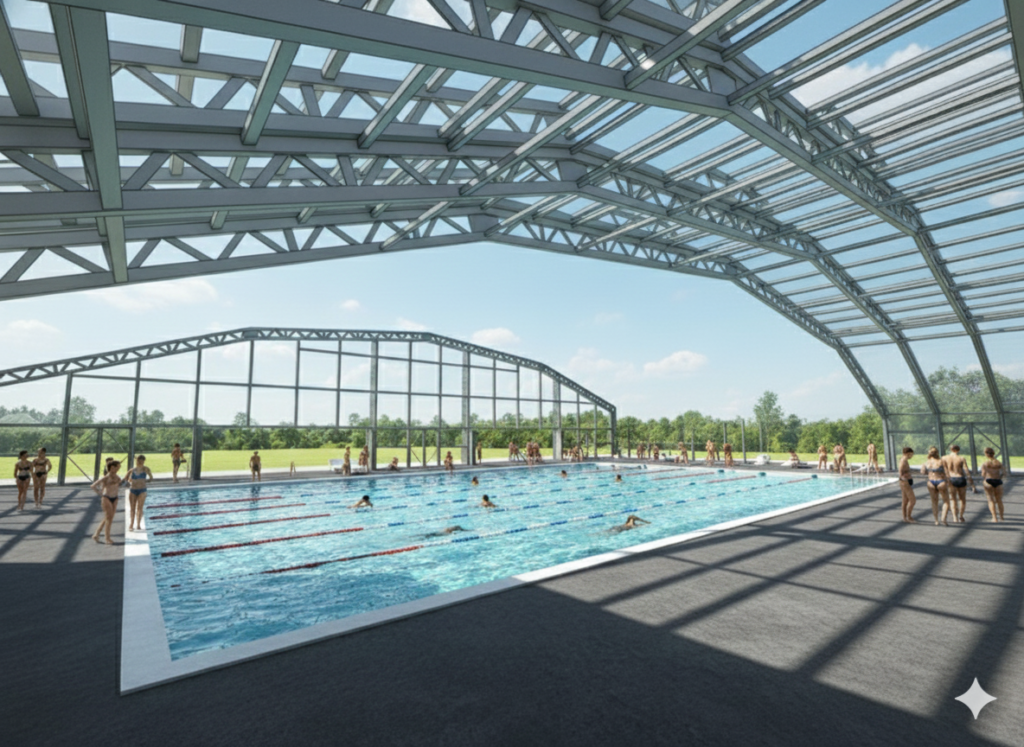
You felt that 3‑month amenity promise because the calendar keeps stealing your weekends. A blue‑sky forecast flips to storms, a September cold snap drops water 10°F, and evening breezes clear the deck by 7 p.m. Go fully indoor and you trade freedom for stuffy air and echoes. Utilization dips, programs get canceled, and memberships churn. We see resale value take a hit when a gorgeous pool can’t reliably host lessons, parties, or family swims.
Then come the swings: wind one day, glare the next, and a surprise closure when the air turns biting. Indoor rooms fight IAQ (indoor air quality) and acoustics; outdoor pools bleed heat and staff hours. Operating costs climb—heaters, dehumidification, and extra cleaning—while value leaks through lost lessons and refunds. For operators, that’s empty lanes during prime hours; for homeowners, it’s a beautiful space you barely use half the year. That’s real money and joy left on the table.
So do you really have to pick indoor control or outdoor joy—or is there a third path?
Saturday wind cancels family swim; Sunday rain scrubs the lap clinic—again. Indoors, guests mention chemical smells and foggy windows, and condensation drips onto furniture. Afternoon glare makes lifeguard sightlines hard, while corrosion starts at railings and fixtures. Dehumidification (DH, pulling moisture from air) runs hard, and noise builds in the room. Comfort dips, complaints rise, and energy penalties compound month after month.
Staff feel it first: red eyes and scratchy throats from chloramines (irritating byproducts when chlorine meets sweat and oils). They juggle fans, doors, and ad‑hoc venting, then close the deck when it’s gusty. Parents ask for make‑goods; hotel guests post about the “humid pool smell.” Your calendar gets choppy, pushing lessons into fewer windows. That unpredictability kills guest satisfaction and forces closures on days you should be busy.
Over seasons, the bills pile up: replacing rusted hardware, re‑coating metal, and swapping failed seals. HVAC and DH equipment wear faster from constant heavy loads, and utilities spike in shoulder seasons. Teams lose hours skimming debris and drying furniture after every breeze. You comp passes, discount parties, and still fight noise and glare. The human cost is real—fatigued staff, frustrated families, and managers stuck in reactive mode instead of growing programs.
Summarize the most common pain categories operators and homeowners report:
Inflatable domes feel quick, but they hum 24/7, trap stale air, and block sky views. Seasonal tension structures help in winter, yet ventilation is limited and daylight is flat. Fully fixed buildings control climate but lock you indoors on the best days. Add code/permit complexity, plus recurring install/removal labor and storage for temporary systems, and you’ve spent heavily without solving the core problem: flexibility when the weather turns in your favor.
Covers save heat but don’t protect decks or guests from wind, rain, or shoulder‑season chill. Domes and tents age fast—patches, seams, and blowers need constant attention—and many look temporary next to real architecture. Fixed boxes raise lifecycle and energy costs and create IAQ hurdles without robust ventilation strategies. Meanwhile, every temporary setup demands anchors, inspections, and seasonal crews. The result? You miss beautiful days, pay ongoing overhead, and still battle comfort complaints.
Call out the three recurring failure modes of stopgap solutions:
So how do you step off that cost‑creep treadmill without surrendering blue‑sky days? A modern retractable enclosure combines operable roof panels (sections that slide or stack open) and openable glass walls, all built with thermal breaks (insulation gaps that stop heat transfer) and high daylighting. On perfect afternoons, you run fully open. When wind, rain, or cold show up, you close to create a calm microclimate that protects water, decks, and finishes. IAQ (indoor air quality) improves, corrosion slows, and energy use steadies.
Control is simple: one button or a smooth manual pull, and you decide the vibe. Training takes minutes. Those canceled lessons from a surprise gust? Now you close leeward walls and keep the program running. Evening chills that emptied the deck by 7 p.m.? Hold warm, still air while keeping sky views. Less debris lands in the water, evaporation drops, and deck furniture stays dry—so you spend time swimming, not skimming. It feels outdoor when you want. It performs indoor when you need.
Automation adds confidence. Wind and rain sensors nudge the roof closed, snow modes limit opening under load, and safety interlocks (systems that prevent movement when doors are open) protect guests. You can add schedules, key switches, or app control tied to your operations. In cold regions, insulated glazing and thermal breaks hold heat; in coastal wind, robust seals and structure tame drafts; in high sun, low‑E glass (coatings that reflect heat) keeps glare down. One enclosure. Many climates.
Want pool‑specific details? Explore our retractable swimming pool roofs to compare spans, glazing, and opening patterns, and decide which configuration fits your climate, footprint, and goals.
From here, we measure what matters: more usable days, steadier programs, happier guests, and less strain on heating, staffing, and cleaning. We tune configurations for homes and for operators—quiet elegance at residence, high‑capacity throughput commercially—so benefits show up in your calendar, reviews, and utility line.
Introduce the list as the top results you’ll notice within the first season and over the long term.
Now, not every enclosure or alternative checks all these boxes equally—our next comparison matrix shows where each option excels and where it compromises.
As promised, here’s the quick matrix showing where each option excels and compromises. Use it to sanity‑check your shortlist. Example: a retractable in Denver runs 10–11 months; Tampa is 12. Ranges shift with climate, size, and design.
| Option | Season length | IAQ & comfort | Energy profile | Maintenance | Programming |
|---|---|---|---|---|---|
| Outdoor pool | 3–5 months (typical climate) | Weather-dependent; wind, glare, chill | Lowest equipment energy; high heat loss | Surface wear; debris; wet furniture | Highly weather-limited; frequent cancellations |
| Indoor fixed building | 12 months | Controlled; chemical odors and echoes risk | Highest heating and dehumidification load | Structural corrosion risk near chlorinated air | Year-round; no open-air days |
| Retractable enclosure | 9–12 months (climate-dependent) | Outdoor feel on demand; strong ventilation | Daylighting; reduced dehumidifier run time | Aluminum structure and finishes resist corrosion | Year-round with open-air days |
| Seasonal dome (inflatable) | 4–8 months (install window) | Limited ventilation; noisy blowers | Moderate-high blower and dehumidifier energy | Install/remove cycles; patches and seams | Extended season; few true open-air days |
Your numbers change with climate, wind, and spans. We’ll tune them in a quick feasibility review—then explore openable walls that pair with roofs for full flow.
Since your numbers shift with wind and spans, pairing the roof with openable walls unlocks cross‑ventilation (fresh air drawn in one side and out the other) and easy indoor–outdoor flow. We mix full‑height sliders, bi‑folds, and segmented panels to fit views and egress. For natatoriums (pool buildings), we use marine‑grade aluminum, powder‑coat finishes, stainless hardware, and tempered/laminated glazing; polycarbonate options stay light and tough.
Control is simple: keep windward panels closed to block gusts, open leeward 30–60% to pull air through (stack effect, warm air rising draws cooler air). Motorized or manual operation with keyed lockouts keeps staff in control. Low‑profile, drained thresholds (sloped sills with weep channels) keep splash outside and wheels rolling. Corrosion‑resistant rollers and hinges handle pool air. Result: quieter decks, clearer sightlines, and steady comfort on days you’d otherwise cancel.
Want the deeper dive on configurations, finishes, and code nuances? Explore opening walls for examples, section details, and design possibilities that pair cleanly with our roofs.
Highlight two popular wall mechanisms and when to use each:
For large spans and premium aesthetics, our folding wall system delivers column‑free openings, strong perimeter seals, and refined hardware. It’s a natural pair for wide pools—next, we’ll match it with the right roof.
You’ve picked your wall approach—now let’s match it with the right roof. We typically use three typologies: multi-bay sliding (modules that stack to open large areas), single-slope retractables (panels glide one direction), and ridge-and-rafter (gable form that parts from the peak). Span, snow and wind loads, and daylight goals drive the choice. We tailor thermal breaks (insulated transitions), glazing (insulated glass or polycarbonate), and control systems—manual, motorized, or sensor‑assisted—to your climate, budget, and openness targets.
Worried about tying into your home or clubhouse? We engineer clean connections to existing beams or new headers, then add custom flashing to keep joints dry. Integrated gutters, weep paths, and positive drainage manage stormwater. Safety interlocks prevent movement when doors are open, and wind/rain inputs automate closure. At commissioning, we walk your team through controls, lockouts, maintenance points, and first‑season checks so operation stays simple. Next, we’ll show how the picks differ for homes versus commercial pools.
Explore our retractable roof systems for spans, glazing choices, opening patterns, specs, and videos that help you visualize fit.
For the broader lineup—including fixed glass and operable options—see our roof systems collection for styles, finishes, and comparison details.
With that broader roof lineup in mind, a home plays by different rules than a clubhouse. Quiet matters. You care about soft rain acoustics, privacy from neighbors, and curb appeal that matches your architecture. Permitting and homeowners association (HOA) reviews matter too—most need a simple packet and a 2–6 week review. We tune glass and finishes to limit nighttime glare and keep neighborhood character intact. Maintenance stays homeowner‑friendly: rinse tracks quarterly, check seals yearly, and enjoy corrosion‑resistant aluminum and powder‑coat finishes.
For operators, the priorities shift to capacity and compliance. We design to IBC (International Building Code) life‑safety, ADA (Americans with Disabilities Act) access, and clear egress paths, while preserving lifeguard sightlines with slim mullions and anti‑glare glazing. Occupancy targets, staffing flow, and noise control drive layout. Lifecycle cost matters: heat retention, easy cleaning, and durable finishes that cut downtime. Procurement is practical—sealed specs, stamped engineering, predictable lead times, and install windows that respect your calendar. Want a simple path? We map steps next.
Homeowners: browse our retractable roofs for residential spaces to see examples, finishes, and ideas that fit your neighborhood.
Outline the key phases so owners know what to expect and when to engage specialists.
For tight footprints or strong prevailing winds, consider sliding wall systems to maximize clear openings, control gusts, and keep thresholds low for safe, smooth access.
That sliding-wall strategy was exactly what a lakeside HOA needed. Their outdoor pool was gorgeous but gale-prone; spring and fall lessons kept getting scrubbed, and members complained about cold decks and constant skimming. We paired a gable-form retractable roof with leeward sliding glass walls (HOA = homeowners association) and integrated gutters. Commissioning took one afternoon: safety interlocks, controls training, and a maintenance walk-through. Outcome in the first month: predictable lessons and warm evening swims—even when wind kicked up.
With weather no longer calling the shots, they expanded lap hours, added senior aerobics, and kept the family slot on Sundays. Staff noticed fewer red eyes and no frantic tarp drills; we balanced natural ventilation with targeted exhaust to manage chloramines (irritating odor compounds). Lesson learned for the board: start permitting and HOA review early, plan drainage at thresholds, and choose low‑E glazing (thin coating that reflects heat) facing west. It reads simple, but it’s the difference between “open-ish” and truly four‑season.
Operating weeks: +24–30. Shoulder-season dehumidifier runtime: down 30–40%. Weather cancellations: down 60–70%. Programming slots per week: up 25–35%.
Explain the components of value and cost owners should tally before purchase.
Those extra weeks and fewer cancellations convert to dollars. Your payback is annual net benefit ÷ project cost. Run conservative, expected, and aggressive cases to see breakeven timing and how sensitive your numbers are.
Span choices and operation matter: a folding wall system can create wider openings, cut columns, and improve turnover. That shifts capital cost and revenue days—often tightening payback in windy or view-driven sites.
Because your payback tightens when downtime drops, let’s talk upkeep. Our frames are marine‑grade aluminum with baked‑on powder coat (a hard, oven‑cured finish) that shrugs off corrosion. Keep seals (rubber gaskets that keep water/air out) clean and supple, and keep drainage clear—tracks and weep paths (hidden channels) just need a rinse. Plan on 10–15 minutes monthly to brush debris, a quick quarterly track rinse, and an annual seal and fastener check. Most tasks are DIY; schedule a technician yearly for lubrication points and alignment. Not “maintenance‑free”—maintenance simple.
Parts and access matter when you need them. We stock common rollers, seals, motors, and controls; most ship in a few days, and access panels make swaps straightforward. Warranties are multi‑year on structure and finishes, with glazing covered per manufacturer—ask us to map the terms to your project. Set a simple rhythm: 5‑minute monthly glance, quarterly cleaning, annual technician visit, and a deeper 5‑year seal refresh if your climate is harsh. That cadence protects your ROI (return on investment) and sets up the next step: safety and code.
Seasonal checklist: spring—rinse tracks, clear weep holes, inspect seals; summer—wash glazing, tighten fasteners; fall—clean gutters/drains, lubricate rollers; winter—brush snow loads, test sensors and lockouts. Log findings and schedule an annual pro inspection.
Summarize what your design team will coordinate with local officials and engineers.
We just covered egress, structure, IAQ (indoor air quality), electrical, glazing, and water treatment—here are rapid, honest answers drawn from real projects.
Still weighing glazing and low‑E (low‑emissivity) options? Request a design consult with Cabrio Structures and lock in year‑round use, fresh air, and lower hassle. Send site photos and your goals; we’ll return a tailored concept sketch and timeline within 5–7 business days.
Before you press Get My Pool Enclosure Plan, here’s who’s advising you. I’ve spent 15+ years engineering retractable roofs and opening walls for pools, hotels, and event spaces, with deep natatorium IAQ (indoor air quality) and energy strategies—ASHRAE-aligned designs, humidity control, and heat‑recovery integration. Results first. Jargon optional.
When we reference statistics, we cite authoritative sources: ASHRAE natatorium guidance (American Society of Heating, Refrigerating and Air‑Conditioning Engineers—HVAC Applications, Natatoriums chapter), IBC/IMC (International Building/Mechanical Codes), and NRPA (National Recreation and Park Association) participation trends. Include inline citations like (ASHRAE, 2023) or (NRPA, 2025) next to the relevant sentence.
Get Expert Help
Discuss your pool roof strategy
Weather is the silent business partner you didn’t agree to — and it still gets a vote on your capacity, staffing, and bookings.
Weather is the silent business partner you didn’t agree to — and it still gets a vote on your capacity, staffing, and bookings.
Cabrio {cab•rio: convertible, opening} Structures Inc. is a nationally recognized designer and manufacturer of patented independently moving roof and wall patio systems. Our structures are located across the country from Boston, Mass. to Seattle, Washington. Bring on the weather.