
8 min read
Energy costs are up, but your guests still want sun and fresh air. Our retractable roofs flood spaces with daylight and natural breezes—so lights often dim 30–60% and fans cycle less—without sacrificing weather control. We’ll share a practical roadmap, ROI (return on investment) math, and real-world examples. Why are lighting and ventilation eating your budget?
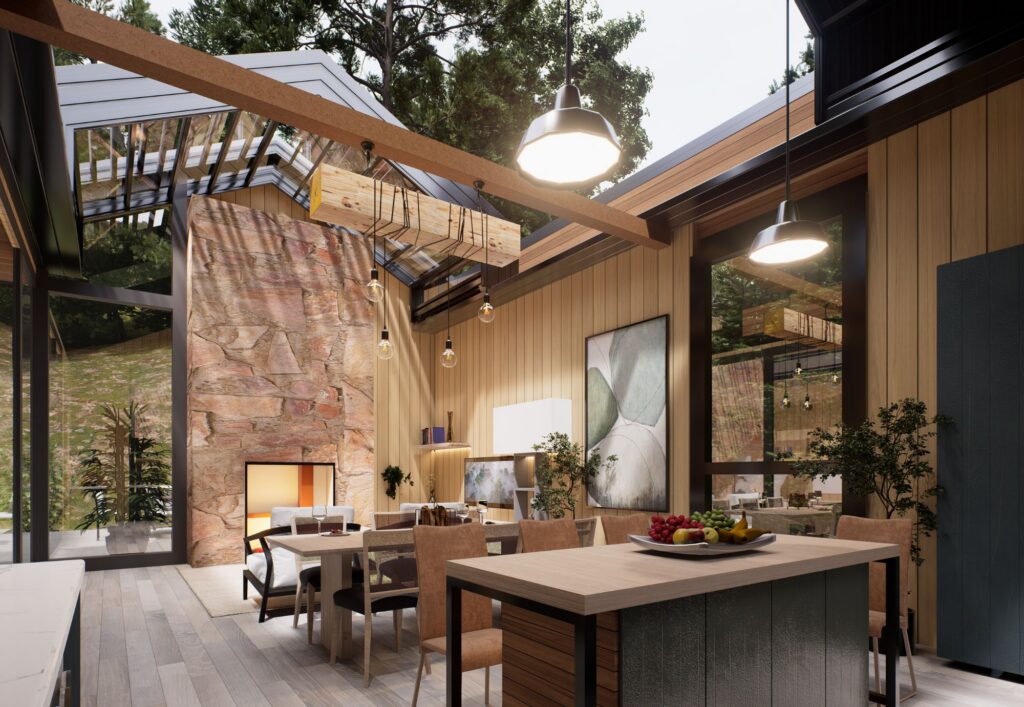
To answer that, look at where your dollars go: we see lighting running 10–20% of site energy, and HVAC (heating, ventilation, and air conditioning) 30–50%. Peak demand charges (fees on your highest 15‑minute kilowatts, kW) magnify both. Runtime creep—systems left on “just in case”—adds hours. Comfort overrides during busy periods defeat schedules. And rising IAQ (indoor air quality) expectations keep outside air and fans running even when the weather would cooperate.
✅ Proven At Scale
We’ve supported hundreds of projects and helped 500+ United States (U.S.) businesses optimize conditioned and outdoor spaces with retractable systems and controls.
When lights and fans shoulder the load all day, you pay twice: once in energy and again in maintenance. Fixtures burn hours, filters clog faster, belts stretch, and coils foul. Comfort still suffers—glare spots, stuffy corners—so staff overrides schedules and kicks systems harder. A 5,000 square feet (sq‑ft) dining room with 1.0 watt per square foot (W/sq‑ft) lighting running 10 extra hours/week wastes 50 kilowatt‑hours (kWh)—before you count the heat those lights add.
You’ll likely recognize these recurring drains—patterns we see in restaurants, venues, and offices every month.
LEDs help, but without daylighting (using sun to replace electric light) fixtures still run. Air‑side economizers (bringing in cool outdoor air) can’t leverage the stack effect (warm air rising to exhaust) without high openings. And comfort setpoints still rely on fan horsepower. The real win is to reduce the load first—less light to provide, less air to move—then let equipment handle only what’s left.
Physics favors simplicity: when warm air can rise out and breezes can cross, motors rest. A controllable opening at the roof and opposite walls creates natural pressure and temperature paths. Simple sensors—light, carbon dioxide (CO2), and temperature—can automate open/close without fragile sequences. With smaller internal gains and less fan time, peaks drop and maintenance shrinks. That’s structural savings, not a seasonal tweak.
Here’s how the common “fixes” play out in practice—and why they don’t change the physics.
Shade-only strategies tame glare, but they don’t deliver fresh air, do they? Openable glass overhead boosts daylight factor (how much useful daylight reaches surfaces) so fixtures dim or shut off. Crack the roof and thermal buoyancy (warm air rising like a chimney) drives the stack effect, lifting hot, stale air out. In warm seasons, that upward pull plus crossflow eases heat without fan horsepower. In winter, close up: low‑E (low‑emissivity) glazing welcomes sun while limiting heat loss, adding gentle solar gains.
Picture a 2,000 square feet dining room with 1.0 watts per square foot lighting. On bright days, daylight lifts illuminance enough to cut fixture runtime 30–60%. Open the roof 10–20% and warm air escapes; pair with two operable walls and you’ll feel a 3–5°F drop in perceived temperature. Sensors do the heavy lifting: light sensors dim fixtures, CO2 (carbon dioxide) or temperature triggers open/close, and wind/rain protection closes automatically. Comfort improves. Bills fall.
That’s the engineered beauty of our retractable roof systems: open for free light and air, close for weather and temperature control, and coordinate with sensors so your space stays bright, fresh, and protected automatically.
Here are the five mechanisms that consistently reduce energy and demand costs.
🧭 Design Visual
Show airflow: side-wall arrows entering low, roof opening arrows exiting high; indicate cross-breezes, integrated shades/frits for glare control, and low‑E glass labels for winter sun paths.
You can picture air rising out the roof and daylight pouring in—so which configuration actually delivers that in your building? Geometry, panel behavior, and span dictate airflow, glare, maintenance, and cost. We’ll match form to function so it runs smoothly on day one—and year ten.
For complex roofs or wide footprints, our Multi-Stack Retractable Roof uses multiple moving groups to span farther, keep panel weights manageable, and maintain clear openings for airflow and daylight.
Prefer simplicity and a clean look? A Single Stack Retractable Roof moves as one group—great for moderate spans, fewer motors, and lower cost—while still delivering big daylight and breezes.
Use these quick rules to match your space and climate—the 80/20 of performance and cost. Next, we’ll pair the roof with opening walls.
You’re tying the roof into sensors and building controls—so what’s missing? A low-side path: add opening walls to unlock true cross-ventilation and more lights-off hours.
In our projects, a 24–30 foot folding wall system aligned with the retractable bay creates a direct in/out air path, shortening pre-service purges and keeping daylight levels high longer.
Here’s why the roof-plus-walls approach outperforms roof-only—and where it tends to pay back fastest:
Flexible zoning for microclimates pays off fastest on patios. If you run F&B (food and beverage), our retractable roofs for restaurants add 15–40% more usable seat-hours, cut daytime lighting 30–60%, and reduce fan cycles. One weekly extra turn on 60 seats adds about $1,800.
Manage a rooftop lounge or hotel bar? Our retractable roofs for rooftops turn shoulder seasons into revenue, extend events, and shave peaks: daylight reduces midday lighting demand, while natural ventilation trims fan kWh (kilowatt-hours). Many teams report 20–30 extra bookable days a year.
If you book weddings or galas, certainty matters. Our retractable roofs for event space create open‑air magic on calm days and close in seconds when rain hits, cutting cancellations. Venues typically add 8–12 bookable days annually and capture 10–20% higher premium-package rates.
Across restaurants, rooftops, and venues, these levers drive quick payback and lower HVAC (heating, ventilation, and air conditioning) energy. Next, we’ll translate the benefits for homes.
Premium experiences matter at home too—why not enjoy them daily? Our retractable roofs for residential spaces turn patios and sunrooms into four-season retreats: open for morning light and breezes, close in seconds for rain, pollen, or heat.
Control comfort like a thermostat for light and air: glide open for breezes, close to block wind or glare. Smart scenes tie roof and shades to weather and schedule, so it just works. With abundant daylight, many homeowners see 30–50% fewer daytime lighting hours and gentler air conditioning (AC) use in shoulder seasons—plus effortless indoor‑outdoor flow for coffee, homework, and gatherings.
You felt the daylight and gentler AC (air conditioning)—so what does that mean for ROI (return on investment)? Translate it into numbers across our roof systems. Share a few basics; we’ll estimate savings and payback.
Use this quick table to size the win: each row quantifies a savings driver or revenue lift with a simple way to estimate it.
| Driver/Input | Typical Range | How to Estimate | Impact on ROI |
|---|---|---|---|
| Lighting hours replaced by daylight | 20–60% of occupied daylight hours | Compare daylight availability to current lighting schedules | Direct kilowatt-hours (kWh) reduction; less heat added indoors |
| Mechanical cooling and fan runtime reduced | 10–40% during mild, mixed‑mode seasons | Model degree-days (weather-based demand) and identify natural ventilation hours | Energy savings plus lower wear on compressors and belts |
| Peak demand shaved | 5–15% on sunny, occupied afternoons | Identify open‑roof windows during peak tariff periods | Lower demand charges on utility bills |
| Revenue lift from comfort and experience | 5–20% added sales in busy periods | Track dwell time, table turns, and booked events | Top‑line growth shortens simple payback |
| Seasonal usable days gained | 30–90 days per year | Compare historical weather closures to retractable usage | More operating days; added seat‑hours and bookings |
Those extra seat-hours and bookings stick when airflow is intentional. Pair the roof with lateral openings using our sliding wall systems to draw air low, reduce drafts, and extend lights-off hours.
Prefer large, clear openings that disappear? Integrate the roof controls with our folding wall system so roof and walls open together on sensor cues; we’ve seen purge times drop 30–50% before service.
Use this field-tested checklist to protect comfort, savings, and equipment life. Nail these details now, then confirm climate loads and code requirements with your local permitting team.
Those acoustic treatments that keep spaces comfortable when open work best when climate loads and the code path are nailed. Are yours? Verify wind/snow loads and site exposure, seismic category, and get stamped structural calculations and attachments. Confirm IECC (energy code) skylight limits and NFRC (fenestration ratings). Check IMC (mechanical code) natural-ventilation openable area and egress widths. Coordinate fire/life safety: sprinkler clearances, alarm interlocks, smoke control. Specify sensor/automation compliance: wind/rain closures, emergency stops, UL 325 (motor safety) and BMS (building management system) integration.
Make permitting predictable with a clear package: stamped structural calculations, shop drawings, anchorage details, load tables, and site-specific sections. Include IECC/NFRC documentation, IMC natural-ventilation calculations, egress diagrams, electrical one-line and control narrative, wind/rain sensor cut sheets, UL 325 compliance, and O&M (operations and maintenance). Add coordination letters from fire sprinkler and alarm vendors. We’ll set a pre-submittal with your AHJ (authority having jurisdiction), then target a complete submittal so review cycles stay to one or two rounds.
Quick win: schedule a 15–20 minute pre-application call with your AHJ (authority having jurisdiction) and ask about utility incentives for daylighting controls and natural ventilation. Many utilities offer custom rebates; early confirmation can shave months and thousands off your project’s payback. Next up: step-by-step path.
Here’s that step-by-step path. We handle design, energy, and permitting; you loop in your architect/GC (general contractor); our installers lead install while your AHJ (authority having jurisdiction) reviews. On-site work typically finishes in 3–5 days.
📊 Next Step
Want numbers for your space? Request a tailored energy-savings model and we’ll send a quick concept sketch with assumptions you can tweak.
Before you request your tailored model, you probably have a few quick questions. Here are concise, practical answers.
Now that you know typical timelines, let’s put numbers behind your project. We’ll build a custom daylighting and natural‑ventilation savings model—lighting kWh, fan runtime cuts, demand‑charge shave, plus optional revenue lift. It’s the same framework we use on restaurants, rooftops, venues, and homes. Start in 5 minutes and see a clear payback range.
Simple process: 1) share square footage, hours, and utility rate, 2) tell us your HVAC (heating, ventilation, and air conditioning) type (air conditioner or heat pump), 3) upload a plan if you have one. We’ll reply within one business day with a concise PDF and a concept sketch. No obligation, no drawings required to begin, and we’ll flag any code items early.
Get Expert Help
Let's discuss your project goals
Weather is the silent business partner you didn’t agree to — and it still gets a vote on your capacity, staffing, and bookings.
Weather is the silent business partner you didn’t agree to — and it still gets a vote on your capacity, staffing, and bookings.
Cabrio {cab•rio: convertible, opening} Structures Inc. is a nationally recognized designer and manufacturer of patented independently moving roof and wall patio systems. Our structures are located across the country from Boston, Mass. to Seattle, Washington. Bring on the weather.